August 19, 2011

The Shortcomings of Field Sobriety Tests

Authorities look for signs of intoxication before deciding whether or not to bring someone to the station on suspicion of driving under the influence. Sometimes an officer only needs to smell alcohol or see an open container in the vehicle to make an arrest. Other times, an arresting officer may conduct a field sobriety test.

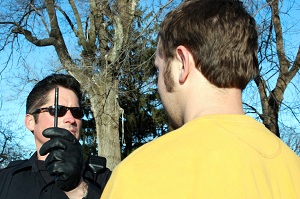
Drivers may be asked to walk a straight line or stand on one leg while counting. Others may have to follow an object back and forth while the officer examines their eye movement. These tests can prove useful for the arresting officer but there are many errors that can be made during the execution of these tests and those errors sometimes lead to wrongful charges.

One of the inherent problems with field sobriety tests in California and throughout the U.S. is that they do not take into account the fact that some people cannot pass them even when sober. Some medical conditions may cause a person to fail the horizontal gaze nystagmus test even if they haven’t been drinking.

Additionally, physical ailments may cause a suspect to be physically unable to balance or walk straight. The results of these tests are determined by the arresting officer who may or may not be properly trained to conduct them. It is crucial that their decisions are not based solely on the field sobriety tests but in conjunction with an accurate breath alcohol test as well.

There are many potential mistakes that can be made during a DUI arrest. Here are some of the questions that arise in these situations. Was the breathalyzer properly maintained and calibrated? Was the suspect read his or her rights? Were the field sobriety tests taken on an even surface? Anyone arrested for driving under the influence would be well advised to discuss their legal options with a skilled defense attorney.

The California DUI defense attorneys at Takakjian & Sitkoff offer free consultations for anyone who has been charged with drunk driving in Los Angeles, Orange or Ventura counties. If you are facing drunk driving charges, please contact us at 866-430-8383 before discussing your case with the authorities or pleading guilty.

July 13, 2010

How Field Sobriety Tests Can Affect the Outcome of your DUI Case

When a police officer suspects a driver of being under the influence of drugs or alcohol, they may conduct field sobriety tests (FSTs). There are a number of non-standardized tests that an officer may administer, but there are three main tests that most officers conduct in the course of a DUI traffic stop.

Horizontal Gaze Nystagmus Test: A police officer will hold up an object, usually a pen, or a finger and ask the driver to follow the object with their eyes back and forth. By carefully watching the driver’s eyes, the police officer will attempt to discover a bouncing of the eye. This bouncing is called horizontal gaze nystagmus. In some DUI cases, observing unsmooth eye movements or early onset may mean the driver has been drinking. This test is subject to the training and ability of the officer giving the test. Technically, only an ophthalmologist can truly administer this test and there are many other naturally occurring conditions besides alcohol that may cause nystagmus.

Walk and Turn: In this test, the driver will be asked to take nine steps, pivot and then walk back. While walking heel-to-toe, the driver will have to count the steps out loud. Someone who is significantly inebriated will have difficultly balancing while walking and may make mistakes while counting. But even if the driver just needs to hold out their arms to balance or they count wrong, the officer may deem it a failed test and charge them with a DUI case.

Continue reading "How Field Sobriety Tests Can Affect the Outcome of your DUI Case" »